
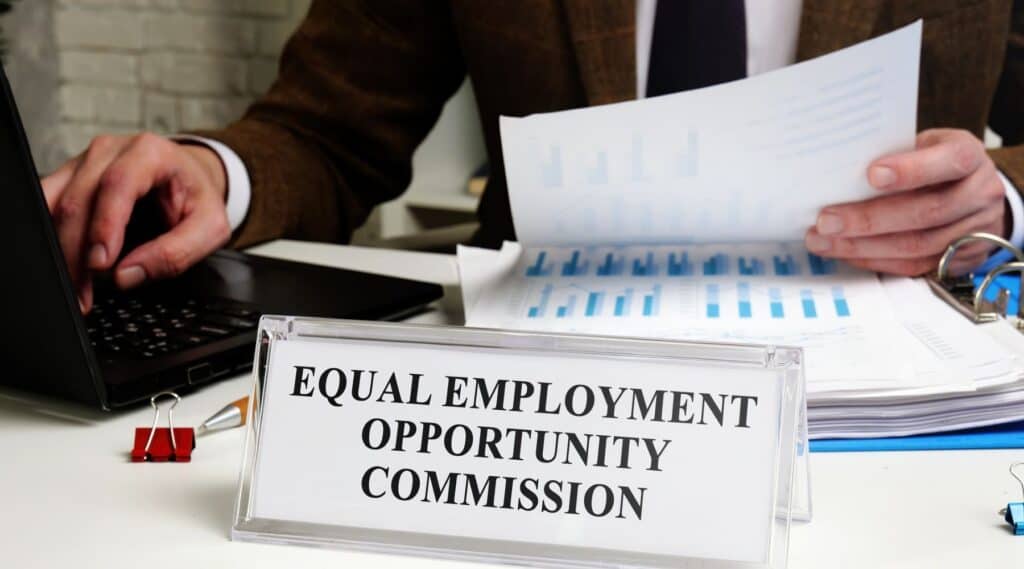
Getting a letter from a government agency isn’t usually the highlight of a business owner’s week, but few envelopes raise blood pressure quite like one from the Equal Employment Opportunity Commission (EEOC). If you are holding a “Notice of Charge of Discrimination,” take a moment to breathe. While this signals the start of a serious legal process, it does not mean your business has automatically done something wrong.
At Fairgrieve Law Office, we guide businesses through the maze of workplace legal issues every day. Whether you are dealing with a claim regarding the Americans with Disabilities Act, wage disputes, or harassment allegations, the goal remains the same: protect your business and reach a resolution.
Here is what you need to know about developing a California EEOC investigation defense strategy for employers without losing your cool.
What Does It Mean When the EEOC Contacts Your Business?
Receiving an EEOC notice means a current or former employee has filed a formal charge alleging that your business violated federal employment discrimination laws. This document typically outlines the nature of the claim (whether it involves race, age, sex, marital status, or a medical condition) and initiates a fact-finding mission.
It is important to understand strictly what the EEOC is doing at this stage. They are acting as a neutral investigator. They haven’t decided you are guilty; they are simply obliged to investigate the claim filed by the “Charging Party.” In California, this gets slightly more complex due to the “work-sharing” agreement the federal government has with the state. An EEOC investigation process that California employers face often runs concurrently with state-level inquiries. The notice serves as a prompt for you to preserve evidence and prepare your side of the story.
What Are the First Steps California Employers Should Take?
Your immediate priority is to stop the destruction of any relevant documents and notify your legal counsel and Employment Practices Liability Insurance (EPLI) carrier. Taking the wrong actions in the first 48 hours can turn a manageable misunderstanding into a significant liability.
To protect your organization immediately, follow this checklist:
- Issue a “Litigation Hold”: Ensure no emails, Slack messages, performance reviews, or surveillance footage are deleted. Destroying files after receiving notice can be seen as “spoliation of evidence,” which carries heavy penalties.
- Identify Your Team: Designate a specific internal point person or emergency contact for legal correspondence. This person will coordinate with counsel and ensure nothing falls through the cracks.
- Notify Your Insurer: Contact your EPLI carrier right away. Many policies have strict reporting windows, and failing to notify them could jeopardize your coverage for defense costs.
- Maintain Silence: Do not contact the claimant to ask, “Why did you do this?” Direct confrontation at this stage typically hurts your case more than it helps.

How Should Employers Respond to an EEOC Charge or Inquiry?
To effectively defend your business, you usually need to file a Position Statement that explicitly details the facts, your policies, and the legitimate, non-discriminatory reasons for your employment decisions. This is your primary opportunity to influence the investigator’s perspective before they dig deeper.
A strong employer response to an EEOC position statement should focus on clear facts and legal reasoning, not emotion. Did the employee claim they were fired due to a protected class status? Your response should provide the performance reviews, disciplinary notes, and attendance logs that prove the termination was performance-based.
During this phase, you may receive requests for additional information (RFIs). The investigator might ask for personnel files of other employees to compare how you treated people in similar situations. This is where many businesses trip up. You must answer truthfully, but you should also object to requests that are overly broad or irrelevant.
What Common Mistakes Increase Risk During an EEOC Investigation?
Retaliating against the employee who filed the charge or ignoring strict deadlines are the two fastest ways to turn a simple claim into an expensive lawsuit. Many employers inadvertently hand leverage to the claimant by reacting emotionally or administratively poorly.
Avoid these critical errors to keep your defense strong:
- Retaliation: The risk of retaliation claims during an EEOC investigation is very real. Even if the original discrimination claim is baseless, you can still be found liable if you demote, exclude, or fire the employee for filing the charge.
- Rushing the Process: If the scope of the information request is massive, you can often request additional time to gather documents. Rushing your response and submitting inaccurate data regarding things like pay scale history or demographics can destroy your credibility.
- Inconsistent Storytelling: If you told the Unemployment Office one reason for termination and the EEOC another, that discrepancy will be highlighted immediately.
- Ignoring State Nuances: Failing to recognize that California laws often differ from federal standards can lead to gaps in your defense.
How Do EEOC Investigations Interact With California Law?
California law often runs parallel to federal law, meaning a charge filed with the EEOC is frequently “dual-filed” with the California Civil Rights Department (CRD). Formerly known as the Department of Fair Employment and Housing, the CRD enforces the Fair Employment and Housing Act (FEHA).
Understanding the California FEHA vs EEOC distinction is vital because the rules of engagement differ:
- Broader Scope: FEHA is generally broader than federal law. For example, federal Title VII applies to employers with 15 or more employees, while FEHA’s anti-discrimination provisions apply to employers with five or more employees, and the prohibition on workplace harassment applies to every employer in California, even those with a single employee.
- Wider Definitions: Under the Fair Employment and Housing Act (FEHA), the definition of disability is broader than the federal standard, making it easier for claimants to qualify for protection.
- Dual Enforcement: For California business owners, an employment discrimination investigation is rarely limited to federal law. While agencies usually divide the labor, a “Right to Sue” letter from the CRD allows the employee to file a lawsuit in state court, a common outcome even if the EEOC dismisses the federal charge.

What Should San Francisco Employers Know About Local Enforcement?
San Francisco employers must navigate unique local ordinances that go beyond state and federal rules, particularly regarding pay transparency and salary history inquiries. San Francisco employment laws add additional compliance requirements on top of the Equal Pay Act and FEHA.
For instance, local “Ban the Box” ordinances and salary history bans were precursors to statewide adoption. In this region, scrutiny on pay scale disclosures in job postings is intense. You must ensure that your investigation defense doesn’t inadvertently reveal that you violated a local ordinance while trying to defend against a federal claim. The regulatory environment here is dense, involving everything from SB 642 (regarding medical professional control) to compliance with SB 590 (mental health contract adjustments). Local enforcement agencies often work with broader state bodies, meaning a slip-up in a local interview regarding salary could become evidence in a broader discrimination probe.
When Should Employers Involve an Employment Attorney?
Legal counsel should be involved as soon as you receive notice of an EEOC charge to ensure you do not inadvertently admit liability or mishandle key evidence. Responding to an EEOC charge involves strategic decisions that can prevent a matter from escalating into litigation.
Attempting to defend an EEOC charge without legal guidance can be risky. A poorly worded email to an investigator may create exposure under state or federal law. At Fairgrieve Law Office, we focus on employment law compliance that California employers can rely on. Our team helps draft position statements, manage the scope of the investigation, and negotiate resolutions when appropriate.
Get Guidance Before Responding to an EEOC Charge
An EEOC charge can quickly raise complex legal and compliance issues for employers. Taking a careful, informed approach early in the process can help prevent misunderstandings, limit exposure, and keep the investigation from escalating.
At Fairgrieve Law Office, we work with California employers to navigate EEOC investigations with clarity and confidence. If you have received a charge or inquiry, contact our team today to review your response strategy and protect your business moving forward.
Love this post? Share it!
Frequently Asked Questions
What should an employer do when contacted by the EEOC?
Respond promptly, notify legal counsel, preserve all relevant documents, and provide a complete, accurate position statement with supporting evidence.
How long does an EEOC investigation take in California?
Timelines vary, but investigations often take several months to over a year depending on the complexity of the allegations and the agency’s caseload.
Can an EEOC investigation lead to a lawsuit?
Yes. The EEOC may file a lawsuit on behalf of the employee, or it may issue a Notice of Right to Sue allowing the employee to bring a private lawsuit in court.